Enter your email address:

Delivered by FeedBurner


August 17, 2010

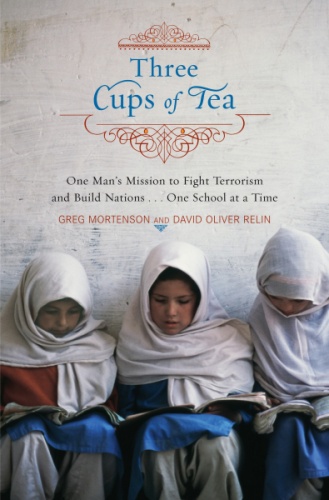
Over the summer, while browsing through my Auburn University alumni magazine, I was surprised to learn that all 4,000 incoming freshmen are being encouraged to read a book together: Three Cups of Tea by Greg Mortenson and David Oliver Relin.


Wow. That’s a major book club, don’t you think?

It’s part of the Common Book program that more than 100 universities are starting to participate in. This reminds me of our own community’s Big Read last spring, when we all read To Kill a Mockingbird together. Can you see how a bookish person likes me gets excited about these types of programs?

So, I had Three Cups of Tea on my mind all summer, wondering what’s so great about it that an entire university would be reading it together. Sure, it was a #1 New Times Bestseller for months, but just because it’s selling millions of copies doesn’t mean I’m going to fall in love with it.

But I did. Oh … there is something rich between the covers of this book that reached the core of me. It’s changed the way I view the world. I hope you’ll get a chance to read it, if you haven’t yet. Especially if you’re a woman. Read it, and you’ll understand.

The story begins with Greg Mortenson’s failure to climb the K2 mountain in Pakistan, the second highest mountain in the world. He almost froze to death one night when the porter carrying his heavy backpacks disappeared far ahead. Greg wandered around lost for a while, and ended up in a village called Korphe.

While staying in this village a while to recover his strength, he was overwhelmed by the kindness and generosity of the people. There were children everywhere, and when he asked the elders where these kids go to school, he got some sad looks.

He discovered dozens of children huddled together in the freezing cold scribbling their math equations into the dirt with sticks. From this point on, he vowed that he would someday return to this village and build them a school.

The book is a page turner. He goes from one hard time to another — living out of his car trying to scrape together his own meager living and keep his dream alive. He writes 300 letters on a rented typewriter until some kind soul shows him how to use the “cut and paste” option on a computer, and then he sends out 280 more. At last he finds a person willing to back him up financially so he can build that first school, Dr. Jean Hoerni.

The rest of the book recounts the trials and adventures Mortenson encounters as he builds that first school in Korphe — which leads to launching a whole organization, Central Asia Institute, dedicated to promoting world peace through education. He builds not only schools, but also relationships with people in the war-torn regions of Pakistan and Afghanistan.


As you’re reading, you suddenly get the big picture that schools lead to educated minds who are less likely to be recruited by terrorists, and who are less likely to strap bombs to themselves and blow things up.

You realize books lead to peace. And so Mortenson’s mission becomes your own.

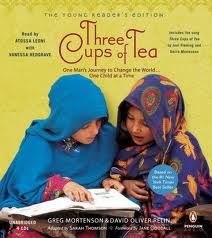
There’s now a Young Reader’s edition, which has full-color pictures and a simplified text. I think this would be a fantastic book for teachers or parents to read out loud. Students can also participate in the Pennies for Peace program.


The title of the book comes from the way in which the people in central Asia conduct business. Mortenson’s mentor, Haji Ali, teaches him:

The first time you share tea with a Balti, you are a stranger. The second time you take tea, you are an honored guest. The third time you share a cup of tea, you become family, and for our family, we are prepared to do anything, even die.

If you have a few minutes, I encourage you to watch this short interview with Greg Mortenson. You’ll be amazed. I can definitely understand why an entire campus will be reading and discussing this book together, and who knows how many new dreams will be launched from this shared experience.

(I’ve heard the story continues, with the 2009 published sequel, Stones into Schools.)

All photos are complements of Central Asia Institute.


August 16, 2010

I’ve written about this before, but I thought I’d periodically update you on overseas teaching jobs. It’s a topic I feel passionate about, and I’m praying there’s a young 20-something woman out there who might discover my post and find a calling in teaching overseas. It’s one of the best things I ever did for myself.

I’d also like to remind mothers of teenagers there’s a huge world out there, and if their kids work hard, they can see it! I tell my kids this all the time, reminding them they’ll need a good education and work skills in order to have the means to travel.

According to Joy Jobs, there are nearly 5,000 overseas teaching vacancies right now. Recruitment for the 2011-12 school year has already begun, as it takes a while for a teacher to tie up loose ends and move overseas.

These jobs do not require raising financial support; the teachers are paid by the school. I know there are many opportunities for young men and women to go into missions, but most of the time, they require raising support.

I received information today about the following jobs. If reading through this list fascinates you (as it does me!), please contact Joy Jobs. There’s a process where you submit your resume and find out how recruitment works.

***************

LAST-MINUTE POSITIONS FOR IMMEDIATE START!

———————————————————
Málaga, Spain

Tutoring Center in Málaga city is looking for full-time and
part-time Native English Teachers. We are seeking motivated and
well-organized applicants with comprehensive communication
skills.

REQUIREMENTS

- Bachelor’s degree: Education, Languages or related field.
(TEFL and other certificates are valuable).
- Only residents in Málaga or nearby.
- Availability from Monday to Saturday (9:00 – 21:00).
- Previous experience will be valued
- Computer skills: Intermediate (Microsoft Office package,
Proficient in Internet and E-mail)
- Work permit for non EU citizens.
- Candidate needs to be flexible, a fast learner, high spirits,
open minded, and optimistic.
- Fluent in Spanish

SALARY

Negotiable, depending on the candidate skills and
qualifications.

Apply today!
———————————————————

St. Vincent & The Grenadines – Carribean

A Primary School Teacher is wanted for a 10 pupil English company
primary school (Pelican School) on a beautiful small Caribbean
island – Canouan.

It is a wonderful experience for someone seeking an adventure,
looking to enrich their career and life experiences and wanting
to make a difference.

• The successful applicant should have experience teaching at
all levels and must demonstrate commitment to equality and
diversity.
• Having varied teaching experiences, teaching science and
social studies, and also having some knowledge of distance
learning techniques would be an asset.
• He/she will be required to work together with 2 other staff,
teach a class of mixed aged pupils, bring a fresh approach to
this small school of very high potentials and great resources.

Minimum Qualifications:
• A first degree or 5 years teaching experience
• Educational training relevant to your home territory
• A passion for teaching
• Vision and enthusiasm

Families and couples welcome.
We offer accommodation, flights and an attractive salary
package.

Deadline: 10 October, 2010

Unsuitable applications will not be acknowledged

———————————————————

MEF International School – Istanbul

For August 2010, this is an urgent vacancy:

•MS/HS Chemistry/Science

Come live in glorious and historic Istanbul, the 2010 European
Capital and work at an IB World School!
Deadline: 1 September (unless post remains vacant after this
date)

———————————————————
URGENT FULL-TIME ENGLISH TEACHERS IN NORTH VIETNAM

Shelton English Training Centre is one of the prestigious quality
English centers. It has been well-established from the high
reputation of Technology Transferring & Education Development
Ltd., Co founded in 1997. The company has been well-known in the
education and training industry over the past 13 years.

Initially starting business in Hanoi-the capital of Vietnam,
Shelton English Training Centre has been expanding the business
wise to other Northern provinces of Vietnam such as Hai Phong,
Quang Ninh. We are seeking for experienced English native
speaking teachers from England, Australia, America, Ireland,
Canada, etc.

Shelton English Training Centre offers a highly competitive
financial and benefits package to teachers, which is based on
qualifications and experience

If you are serious in teaching and fun loving children then this
is a great opportunity. What are you waiting for, come and join
us!
———————————————————

Abu Dhabi – United Arab Emirates

•Math Teacher Advisor/Curriculum Support Specialist for a boys
middle school in Abu Dhabi!
Be a part of Educational Reform in exciting Abu Dhabi! Assist
the local staff in the implementation of a new curriculum, new
teaching and learning methodologies, and make a difference!

The right candidate will have 5 years relevant teaching
experience and

· Hold a teaching qualification of at least graduate level
· Experienced in curriculum management and development
· Experienced in the use and analysis of performance data
· Sound understanding of innovations in teaching and learning.
· Proven commitment to quality
· Evidence of an ability to understand the ethos of partnering
and of delivering in that environment.
· Excellent English communication skills (both oral and
written)
· Competent in the use of IT and willing to develop these
further
· Respectful and sensitive to local culture and heritage
———————————————————

Government Schools in Malaysia

* English Teaching Professionals as English Language Trainer

From contract period 2011 to 2013 – 3 years

– for primary students
– to enhance the local teachers teaching
competency via co-facilitation and training
– to start in end 2010.

Excellent Benefits and rewards to the right candidate. Malaysia
is a fantastic palce to live.

Application Deadline: 28 October 2010
———————————————————

Kingdom of Bahrain

•English Teachers Required Urgently!

Two experienced English teachers (5-10 years) required to teach
English at middle and high school levels leading to GCSE diploma
in a private school in Bahrain:current strength (300 students)
Knowledge of GCSE curriculum would be an added advantage. Masters
degree preferred but not essential but ability to work in a
highly diverse environment with different nationalities is key to
success. Potential joining date is September 1, 2010 and
therefore speed is of essence. Attractive tax free salary, free
furnished accomodation,leave travel and medical and a two year
fixed contract are available for the most deserving candidates.

Bahrain is one of the most desirable places in the Gulf (GCC
States). Considerable saving potential and no restrictions on
expatriate living.

Apply immediately with CV, cover letter, photo and three
references

———————————————————
Bali – Indonesia!

International School in Bali, Indonesia urgently and immediately
requires a Primary Grade 2 teacher.

Degree in primary education and experienced teachers preferred.

Apply ASAP!

By: Heather Ivester in: Education, Travel | Permalink | Comments & Trackbacks (0)


July 30, 2010

Hey Moms and Book Lovers!

I just found out about this very cool program for kids. We were shopping at the mall recently looking for new backpacks and school clothes, believe it or not, and we slipped into Borders to see what was new in the children’s book department.

I found out it’s not too late for your kids to join in the Double Dog Dare Summer Reading Club. All you have to do is go here and print out the form, then have them fill in ten books they’ve read since school was out. You have until August 26 to turn the forms in, and your kids can win a free book!

The books they can choose from are awesome:

Ramona the Brave, by Beverly Cleary
Miss Daisy is Crazy! by Dan Gutman
Flat Stanley, by Jeff Brown
Dear Mr. Henshaw, by Beverly Cleary
The Ruins of Gorlan, by John Flanagan
Hoot, by Carl Hiaasen
The Witch of Blackbird Pond, by Elizabeth George Speare
Johnny Tremain, by Esther Forbes
The River, by Gary Paulsen
Kristy’s Great Idea, by Ann M. Martin (Babysitter’s Club)

Hmmm … in looking over this list, I realize we already own most of these books. But I still plan to go pick up our free copies because, don’t you know, books make great birthday gifts! And they also make nice teacher gifts as well, since I know teachers love having their own stash of great books for kids to read.

Isn’t this a fun idea? Thank you, Borders marketing people! We moms need all the help we can get motivating our children to read.

P.S. Even if you don’t join the program, be sure to read Wimpy Kid author Jeff Kinney’s letter to educators about the importance of reading.


July 13, 2010


I hope you’re all having an amazing summer, sipping lemonade and staying cool. Here are a few blogworthy bits and pieces I’ve compiled for you. I seem to always be on the lookout for items that relate to TEEN WRITERS, so I think God is working on my heart in this area. I’ll soon have a house full of teens, and of course I want them to be writers!

*Randy Ingermanson has written a wonderful post, How Old Must You Be To Write a Novel? I wish I’d read this when I was 15. Pass this along to any teen you know!

*Michelle Medlock Adams is the new teen content editor for ibegat, an online magazine for teens. She’s written a post full of encouragement and cool links to get teens sending their work out.

*Agent Chip MacGregor recently posted about 10 Errors That Drive Me Crazy. I laughed all the way through this post, yet secretly cringed when I realized how often I commit these annoying bad habits. If you’re looking to improve your writing, read Chip’s list.

*In my other life, before having kids, I used to teach high school English. When I read Whitney L. Grady’s story, Why I Teach, it gave me chills and reminded me why so much joy can be found in the classroom.

*Jan Fields has written a snazzy article here on how to save postage when sending your writing off to editors. What do you do if a publication requests that your manuscript be included in the body of an email? See Jan’s tips on formatting.

*One of my lifetime goals is to read every book that has won a Newbery Award. So, I was totally inspired when I read about this little ten-year-old girl, Laura, who has already read every single Newbery winner. AMAZING! She even includes links to reviews she’s written for most of the books. I better get busy catching up with her.

*Here’s another fun article for you book clubbers out there, How A Book Club Changed My Life.

*Rounding out this list, my good friend Sally Apokedak alerted me to this captivating article by William Zinsser, on how he wrote his perennial best-selling book, On Writing Well. I keep Zinsser’s work only a few inches from my computer, so I loved reading the story behind his creation of it. Thank you, Sally.

Enjoy your summer reading!


July 6, 2010


We have a guest today who’s an expert on teaching kids about the great outdoors. I had the privilege of meeting Heather Montgomery at an SCBWI conference a couple of years ago, and her enthusiasm for science writing is contagious!

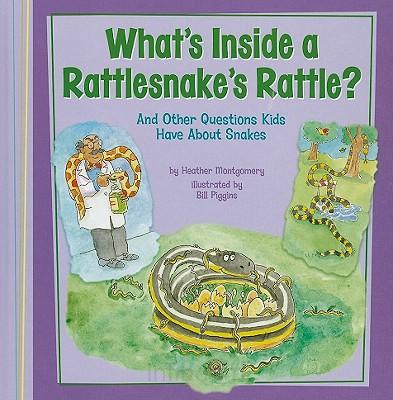
She’s the author of several fascinating books, including How is Soil Made? Mummies: Truth and Rumors, How To Survive An Earthquake, What’s Inside a Rattlesnake’s Rattle?: And Other Questions Kids Have About Snakes, and Why Do My Teeth Fall Out?: And Other Questions Kids Have About the Human Body.

Besides books, we often see Heather Montgomery’s byline in Highlights magazine, which our whole family loves to read!

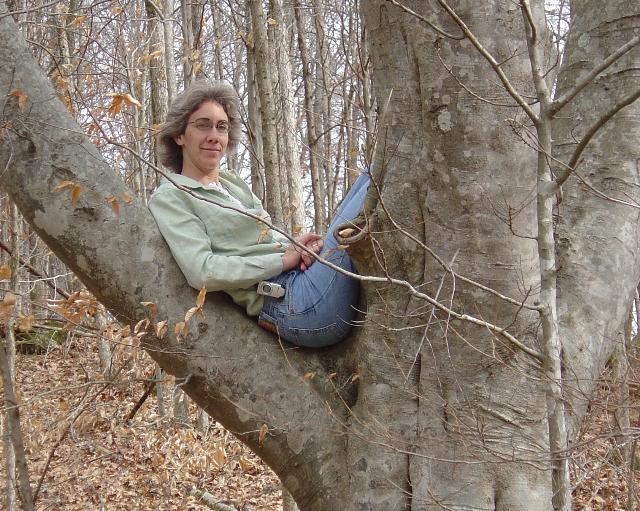
Hello, Heather. You look comfortable up there in that tree. How did you become interested in nature writing?

I love nature and teaching about it. One day I realized that I could teach many more people through writing than I could ever hope to reach in person, so I decided to try my hand at nature writing for children.

Were you inspired by nature as a child? What were your favorite activities to do outdoors growing up?

I’ve always loved the outdoors. I grew up in a rural area where we spent our days running through the woods, playing tag in the yard, and pulling oysters out of the Chesapeake Bay.

Our family vacations were to state and national parks, and I attribute my love of learning in the outdoors to those early experiences with awe-inspiring nature rangers.

As a child I was scared of spiders and was not thrilled about some of the subjects that now amaze me, but I’ve learned that the more you learn about something, the less you fear it. Now I regularly hold spiders in my hand to teach children about them. I’ve always been curious about science and how things in nature work.



Yikes! I’m not sure I could hold a spider in my hand. What do you most enjoy now?

I haven’t outgrown my childhood pleasures. I particularly like to climb trees, wade in clear streams, watch bugs, and garden. I also love just about any sport or game played outdoors. One of my greatest pleasures is taking student groups outside to nature journal and discover the excitement of science.

Sounds like you’ve chosen a career you love! Why do you think it’s important for today’s parents and kids to get outside and explore the great outdoors?

The outdoor environment is perfect for stimulating a child’s curiosity. No matter what their interest — science, art, music, sports — they can find nature inspiring and develop life-long healthy hobbies.

Humans like to learn, and being in a natural environment where learning comes easily helps children realize that learning is fun. Free play in the outdoors is critical to the development of curiosity, physical health, and a sense of place.

I agree. Kids learn more from experience than from watching it on a flat screen. I see you’ve written a number of books on a wide range of subjects, from earthquakes to soil to rattlesnakes, and more! How do you choose to write on a topic?

When a potential topic comes to my attention, my first thought is “How interesting is it to me?” Is it something I might want to spend a few years learning and writing about? If I’m not passionate about it, then it won’t make a good topic for a kids book or article.

The second “test” I give it is marketability. Is there a publishing house out there which might be interested in it? Answering this question requires a good bit of market research.

Thirdly, I consider the practicalities. Is there enough material out there on the topic, do I have good access to experts on the subject, etc.?

Most of the books I’ve written (and all that I’ve published so far) have been on assignment. Educational publishers or book packagers have assigned me the project based on my experience and their needs.

What has been one of your most intriguing assignments?

One of the most interesting bits of field research I’ve been able to do was at Mammoth Cave. I joined a group of middle school students who were trying to figure out why one of the rivers in the cave runs backwards sometimes. We crawled through the cave, saw mummified bats, pulled test equipment from a river so far below us that we could not even see it and found a blind cave crawfish. I’m working to turn that experience into a magazine article.

That sounds incredible. I hope we’ll be able to read about it!

I also enjoyed the utterly gross experience of dissecting a rattlesnake. When I was writing my upcoming book on rattlesnakes, I happened to find a dead rattler along the road. Always one for hands-on learning, I decided to dissect it (Warning: Do not try this at home).
Wow! Did you feel like you were in any danger doing this?

Not at the time, but later when I learned that a rattler’s fangs can strike on reflex even after they are dead, I wondered if it had been such a good idea.

From that dissection, I did learn that most rattlers have only one lung — a neat anatomy note that I use during my school visits to help students think critically about how a body is designed.

Do you take your own photographs for assignments? Do you think it helps to sell an article or book idea if a writer includes his or her own photographs?

I do take photos for my projects, but mostly for my own reference and use. They, along with my nature journal, help immensely when I’m working on adding vivid detail to a manuscript. Some editors, like those at Highlights require that you submit photos to support the article, but most prefer to use professional photographers or stock photos.

How did you get started in writing for Highlights magazine? What do you recommend for writers who’d like to break into this publication?

I was fortunate enough to attend the “Writing from Nature” workshop put on by the Highlights Foundation. During an amazing five days I learned boatloads of information about writing for kids and met the science editor for Highlights. A tip I learned at the workshop was that every piece in the magazine is written by freelancers. That includes even the three-sentence “Science Corner” pieces and the short puzzles. Those are a great way to get a foot in the door.

Can you tell us about your involvement with the SCBWI (Society of Children’s Book Writers & Illustrators)? Do you think this organization is helpful for people interested in being published in the field of children’s literature?

Joining and becoming actively involved with the SCBWI has been the single step that has most helped my career. Through the organization, I’ve joined a critique group which has proven instrumental in improving my writing and keeping me producing work.

I volunteered to help and have become the Assistant Regional Advisor for Southern Breeze (the Alabama, Georgia and Mississippi region). This involvement has exposed me to numerous talented members who have all willingly shared their knowledge, helping me each step of the way. The SCBWI publications have been an invaluable resource as I have navigated the stormy seas of the marketplace.

Would you recommend SCBWI conferences? Is it a good idea to go if you’re just getting started in writing for kids?

Absolutely! Through SCBWI international and regional conferences I have learned about the business end of being an author, had the pleasure of meeting editors, and forced my shy self into networking. For people new to the industry, in addition to finding a supportive critique group, I would recommend reading the publications provided by the SCBWI.

Then, I’d recommend attending a regional conference or event which focuses on craft. After you have some experience, try to attend conferences and events designed to help market your work. The professional critiques available at these conferences are a good step once your work has been critiqued by peers and revised several times.

This fall I’ll be presenting at both the Carolina’s and the Southern Breeze regional SCBWI conferences. I hope to see you there!

That’s great! I’m hoping to go to one of these SCBWI conferences. Are there any other conferences you’d recommend to aspiring writers?

I highly recommend any of the Highlights Foundation Workshops. The folks at Highlights genuinely care about your progress as a writer and about providing the best literature for children. Plus, their food is scrumptious. :)

Mmmm…All the more reason to go! Can you tell us what your latest writing project is these days?

I’m working on numerous projects on topics ranging from hiccups to parasitic wasps and even a work of fiction. In the near future, I’ll have two more snake books published. One is on garter snakes, and the other on rattlesnakes. Did you know that these snakes give birth to live young instead of laying eggs? Nature works in mysterious ways — ways that scientists get to study and figure out!

Cool! You make it all sound like so much fun. Thank you for visiting here with us!

My pleasure.

You can learn more about Heather Montgomery at her author website, as well as at her award-winning consulting business, DEEP: DragonFly Environmental Education Programs. Be sure to scroll down to read Heather’s article, Most Dedicated Mom. I think you’ll be quite surprised!



June 23, 2010

Our church recently made it through a full week of Vacation Bible School, using Lifeway’s western theme, Saddle Ridge Ranch. We had a fantastic turnout, with over 400 in attendance, and I have to say this was one of my favorite themes. Yee-haw! I’m wondering if any of you out there have used this with your church VBS.

The motto, “Need Answers? Ask God!” was easy for kids to remember, and we memorized the key scripture, James 1:5, in unison:

Now if any of you lacks wisdom, he should ask God, who gives to all generously and without criticizing, and it will be given to him.

VBS has come a long way since my days of singing “Deep and Wide” and drinking orange Kool-Aid from Dixie cups. It’s a major task trying to reach this generation of high-tech kids, but I think Lifeway has once again done a great job.

In my tiny speck of the globe, I worked with the fifth graders, on the third floor of our Southern Baptist church. I really enjoyed this age group. We spent about an hour teaching the lesson, broken up into different games and activities. The rest of the morning, the kids went to worship ralley, crafts, snack, music, and recreation.

I found it amusing that one of the boys used his ipod to look up scripture, and he was always the first one to find it. “EPIC” seemed to be the word of the week, as in “Epic, man! That is so cool!” It’s exciting for me to be around kids who are being exposed to the Bible for the first time.

We once asked a question about Joseph, and a little voice piped up, “Is he the guy that got thrown in the lion’s den?” To which someone giggled, “No! That was Daniel, you dork.” We passed out Bibles and asked the kids to look up scripture. One girl flipped hers open then whispered to me, “Is Genesis before or after Isaiah?”

I loved all of this. These fifth graders will come of age around 2020 or 2030. They’ll be making decisions someday about where to live, what to do with their lives, whom to trust. I hope they’ll remember these days of VBS and seek the still, small voice of God as they plan their journeys.

The highlight this year was definitely the music! Jeff Slaughter did an amazing job with keeping the kids interested. I don’t know if he wrote and choreographed all the songs, but he’s the guy we saw dancing around on a big screen every morning singing “Tumbleweed” and “Like Jesus” (my personal favorites). You can listen to the songs here.

And now we have a whole year to get ready for the new 2011 theme: Big Apple Adventure!


June 1, 2010


I reviewed this book nearly five years ago on Amazon, and I don’t think I’ve ever posted it here. Teach Your Child to Read in 100 Easy Lessons is still in print, and I noticed it’s garnered 549 reviews, from 1996 to 2010. WOW. I’d call this book a success from both author and publisher standpoint. Many books barely stay in print 3 years, much less garner hundreds of reviews over a 14-year time period.

Educating your child never goes out of style.

I used this method to teach three of my children to read, and I was thinking about pulling it off the shelf this summer just for something fun to do with my five-year-old. I’m a lot more laid back than I was a decade ago. Now I think … what’s the rush?

Parents feel so much pressure to help their kids get an early start in reading … but kids need to be active and healthy more than anything. Let them run, jump, explore, play, dig, swim, touch, slide, kick! I see so many children with eyeglasses now — I’m wondering if all this early reading push might be straining their eyesight. I even saw a commercial recently where a mother was teaching her baby to read before it could even talk. WHY??!!

But if your child is showing signs of reading readiness, here’s a good way to go about the process. So, without further ado, here’s my Amazon review, published in September 2005:

SIMPLIFY YOUR TEACHING; SIMPLIFY YOUR LIFE

I’m using this book to teach my third child how to read, so I think it’s high time I wrote a review of it. Parents, this is the only book you need to get started on the most important skill they’ll ever learn. And YOU can be the one to teach them!

There are lots of fancy-schmancy phonics programs with bells and whistles — and games and prizes and treasure chests and eight million little stickers and tiny books to keep up with. If you like all that, and need all that, then more power to you. I can barely keep up with everything else I have going on, much less a complicated method of teaching my child to read.

Simplify your life, and just get started. For less than 20 bucks, you’ll have your child well on his or her way to reading.

OK, the title is a little misleading. It’s not EASY, by any means. Especially if you have an active four-year-old boy. Let him do his lessons standing up, lying on the floor, jumping up and down the stairs, out in the yard — he’s active, and let his gross motor skills be used while he’s learning. It takes 10 minutes of super-focusing — but in between the different parts of each lesson, let your child move around. You want him to love reading!

Also, don’t feel like you have to do the writing task of each lesson. My girls love to write, so this was fun for them. But I skipped it with my son until he was more ready to hold a pencil. Actually, we did some lessons out in the driveway, with a fat piece of chalk. He had a great time and usually ended up drawing a whole train system or town after we finished his lesson.

It works. It really does. And it’s amazing to be sitting next to your child the first time they learn to read the word, “see.” Or “mom.” (“Mom! I just read the word ‘mom!’” they’ll say.) It’s something you’ll always remember doing together.

You don’t have to be a reading teacher. You don’t need any special skills or experience. You read the script in red print. You stay on task. And you finish the lesson. Then you praise your child and tell her how smart and wonderful she is!

With each of my kids, we made a VERY SIMPLE chart that had 100 squares on it. I just used a ruler and made some lines and put numbers in them — didn’t even use the computer. It took 5 minutes. Then, after we did a lesson, I let the child put a sticker over the number. Any kind of sticker. All those hodge-podge sheets of stickers you end up with — they work great for a reading chart.

I let each child pick a reward they wanted to receive when they finished all 100 of the lessons. That gave them great incentive to get through the whole book.

For extra practice, I recommend the Bob books, which you can see listed on this site. Kids love these books — they’re adorable. Scholastic makes a good set of beginner readers as well. But you don’t need anything else besides this one book — the little Bob readers can just help reinforce.

As a busy parent, this is one of the most enjoyable things you’ll ever do with your child. But don’t feel like you have to rush — do a few lessons, and if you need to take a break, then do. I highly recommend Raymond and Dorothy Moore’s BETTER LATE THAN EARLY if you’re the type to freak out that your three-year-old can’t write his ABC’s. Too many parents push their children and ruin their eyesight at a young age.

Have fun watching the light go on!


May 17, 2010

Parents today face many challenges trying to raise children who are kind, respectful, and exhibit good character qualities. Sometimes it seems like an impossible task.

I’m in the thick of it, with my kids still in preschool, elementary school, and middle school. I have no idea how they’ll turn out, and I cringe at the thought of giving anyone advice on parenting.

Still I have hope, which is all we need, right? What I do is try to surround myself with amazing people who are experts in certain areas, and I seek them out for advice. So here, I want to point out to you a wonderful program that has been an immense blessing to our family.

You can read about the National League of Junior Cotillions on their website. In our hometown, this program reaches sixth through eighth grade students, and it’s one of those word-of-mouth things where you hear about it from somebody whose kids are in it. There’s a limited space, and it fills up extremely fast.

So I’m telling you about it now, because if you’re interested, you can look up your state on the website, find out if you have a local program, and contact the director. The directors are planning the 2010-11 season now, so if you want to get involved, now’s the time.

Here are a few topics the classes cover:

EVERYDAY MANNERS
* First impressions
* Introductions
* Greeting and shaking hands
* Paying and receiving compliments
* Correspondence
* Telephone manners
* Family dining
* Table manners
* Polite conversation
* When to rise
* Doors and coats
* Sports etiquette

FORMAL MANNERS
* Formal dining
* Party courtesies
* Hosting a party
* Receiving lines
* Eating unusual foods
* Instructional dinners

CHARACTER EDUCATION
* Honesty
* Integrity
* Promise keeping
* Fidelity
* Caring
* Respect
* Citizenship
* Excellence
* Accountability
* Handling peer pressure

ELECTRONIC ETIQUETTE
* Cell Phone Courtesies
* Phones and Digital Manners at Home
* Electronic Etiquette at Home, School, or Office
* Fax, Copier and Printer Protocol
* Digital Courtesies in Public Places
* Parent’s Guide to Electronic Etiquette

TODAY’S “NETIQUETTE”
-Rules associated with the use of web surfing, emails and instant messaging
* Responsibility
* Ethicality
* Consideration

DANCE
* Music appreciation
* Teamwork
* Timing
* Coordination
* Basic dance courtesies
* Current popular line dances
* Dance include the Waltz, Fox Trot, Cha Cha Cha, Shag/Swing,
Rhumba, and Tango.

Our local program hosts two balls: a winter ball and a spring ball. For all of us moms whose daughters have grown up reading books and watching movies about princesses, these balls are dreams come true. In the spring, the girls all wear white dresses, with elegant white gloves, and the ballroom scene creates a gorgeous picture of budding womanhood. The boys, I must add, look mighty handsome in their coats and ties.

In her novel, Betsy in Spite of Herself, Maud Hart Lovelace, describes the dance programs that were being created for the Leap Year Dance of 1908:

Tacy and Alice are making the programs. They’re terribly cute, with a bar from the ‘Merry Widow Waltz’ painted on the cover. But fifteen dances, Julia! Cab will ask me for one, of course, and Tony, and Dennie, and Pin, and Al, probably, and Squirrelly and Harry, but that’s only seven. I’ve fifteen to fill.

Over a hundred years later, I have the feeling that Maud Hart Lovelace would be pleased that girls are still filling out dance cards and waltzing through their coming-of-age years. As a parent, it was a happy experience for me, and I’m passing my joy along to you.


April 28, 2010

One of my favorite places in the world is a red brick building on an emerald patch of heaven in Montgomery, Alabama.

I’d let the years slip by without visiting. Two decades. Like an old friend, I missed this little oasis of literature and decided to do something about it last fall.

I was supposed to be working on a Nanowrimo project, but things got rough. I took a breather and clicked over to the Alabama Shakespeare Festival website — when inspiration hit!

A play! Yes! The play’s the thing!

I discovered two upcoming Shakespeare plays, All’s Well That Ends Well and Hamlet. I chose “Hamlet” because there are so many famous quotes taken from this play — plus, I figured my son might like the sword-fighting scenes. My husband liked the idea and so we bought a few extra tickets for extended family to join us, (which made great Christmas presents!).

Then the waiting began. April seemed forever away — but finally the big date arrived. We headed down the highway to Montgomery … and a trip down memory lane for me.

When I was an English major at Auburn University, my professors took us to the Alabama Shakespeare Festival every quarter. I remember seeing tragedies “Romeo and Juliet” and “Julius Caesar,” and the comic “As You Like It.” It was such a treat to get away from dorm life and essay exams. I loved seeing the plays performed live on the stage.

I never imagined 20 years later, I’d be bringing my own family with me.

When we entered the theater, the room seemed hazy, as a smoke machine of some sort created an atmosphere of fog. Nearly every seat was filled, and I noticed rows and rows of teenagers.

We sat next to a group of kids, and I wondered if they were on a field trip. I struck up a conversation with their teacher who told me there were 60 students altogether, from a Christian school literary club in northeast Alabama.

The girl next to me wore blue jeans and smiled at me, popping gum and showing her braces. “I can’t wait for this to start,” she confided. “Our teacher told us all about it. I think Hamlet is going to be so cool.”

Behind us, a row of teens chatted and laughed, some texting on neon cell phones, others nodding in rhythm to unknown tunes from their ipods. I wondered if they would get Shakespeare. Would it seem too, you know, ancient for them?

The play began, and we were all spellbound.


Nathan Hosner’s portrayal of Hamlet was so realistic I don’t think you had to understand a single word to know what emotions he expressed. We held our breath as he soliloquized and felt our eyes water up at the tragedy.

We were the audience Shakespeare originally wrote for, the masses who sought escape from the sweat and toil of Elizabethan England.

I peeked at the girl next to me and the row of teens behind me. They were all leaning forward, perched on the edge of their seats, not a whisper among them. Over four hundred years after this play was written, we were still totally enthralled.

At the intermission, I overheard a girl behind me say, “When are they all gonna start getting killed? I thought everybody dies in this play.”

“It’s coming up,” somebody answered.

And of course, in the end, the tragedy unfolds with devastating consequences. We left, pondering how it all happened, what Hamlet should have done differently, why revenge isn’t the best course of action, etc.

In the program, Dr. William Engel explained:

Part of why this play remains so popular is its fearless examination of human nature. It explores, among other things, authentic responses to grief and mourning, the uncertain line between sanity and madness, the stresses of dating and marriage, and the pressures of living up to parents’ expectations.

Shakespeare spoke to all of us that evening, whether we dressed up in coat and tie or donned our favorite blue jeans. I can’t wait to go back again.

As an added bonus to our trip, we swung by Auburn on the way home, my first time back in 15 years. It’s the place where I learned to love the lines of Shakespeare, and where a whole new generation is reading him now.


Samford Hall, Auburn University


March 18, 2008

I receive a LOT of press releases from PR firms asking me to post announcements on my site. Usually I ignore these because I don’t want to waste your time here by turning into a junky blog full of commercials for other people’s stuff!

But THIS contest I found worthy of your attention for two reasons:

1) It involves writing an essay, with a deadline. I’m always in favor of finding ways to motivate kids to see that English grammar and composition actually DO have a purpose in life beyond school. If they (or YOU) can write an essay strong enough to persuade the judges in this contest, it’s a great way to honor someone you love (and there are some mighty fine prizes, as you’ll see below!).

2) This is a contest to honor teachers. I love teachers! I am, on occasion, a teacher!

So here’s the announcement:

Lands’ End is announcing the Teachers Light the Way Contest. The company will recognize outstanding teachers that have made a difference in the life of a student, a school or a community.

Forty-five (45) teachers will receive the coveted Lands’ End Lighthouse Award – representing the company’s 45-year history.

o Three (3) Grand Prize winners that will receive between $4,000-$10,000 for the teachers to split with the winning school.
o Forty-two (42) Honorable Mention winning teachers will receive a $100 Lands End gift card.

But that’s not all – readers who nominate a Grand Prize winning teacher will also receive a $250 Lands’ End gift card. Readers who nominate an Honorable Mention winning teacher will get a $25 Lands End gift card.

If your readers would like to recognize an extraordinary teacher or get more information, they can submit an essay up to 500 words and fill out the online entry form at www.landsend.com/teacheraward.

The contest will end at midnight, April 17, 2008.

By: Heather Ivester in: Education, Writing | Permalink | Comments & Trackbacks (2)