Enter your email address:

Delivered by FeedBurner


December 9, 2011

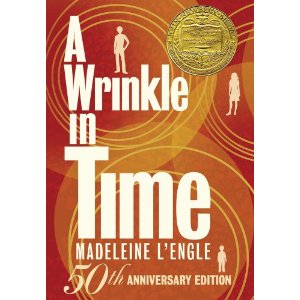
I was thrilled to see that a new 50th anniversary edition of A Wrinkle in Time is coming out next month — too bad it’s not in time for Christmas because this would be at the top of my Christmas wish list!

Fans of Madeleine L’Engle’s writings will want to own a copy of this new edition, which contains a forward by Katherine Paterson, an afterword by Madeleine L’Engle’s granddaughter, Charlotte Jones Voiklis, as well as photographs and memorabilia, the author’s Newbery Medal acceptance speech, and other bonus materials.

Although I wasn’t crazy about Disney’s movie version which came out in 2004, I’m so glad we own the DVD because it contains a beautiful interview with Madeleine L’Engle, in which she describes how she wrote the draft of the book in about two weeks, in between changing diapers and reading aloud to her children. It was rejected over 25 times before it was finally accepted by an editor at Farrar, Straus and Giroux, earning her the Newbery Medal in 1963.

I LOVE this book — I remember reading it the first time in third grade, when our family had moved to a new city, and I didn’t know a soul. A kind librarian in my new school showed me the fiction reading room and told me, “I think you’ll enjoy this book,” handing me A Wrinkle in Time. Oh, how I fell in love — and even more so now, as a parent, I love the book because of the Christian message that love conquers all things, even fear.

You can read more about this upcoming new edition here, in Publisher’s Weekly.


August 31, 2011


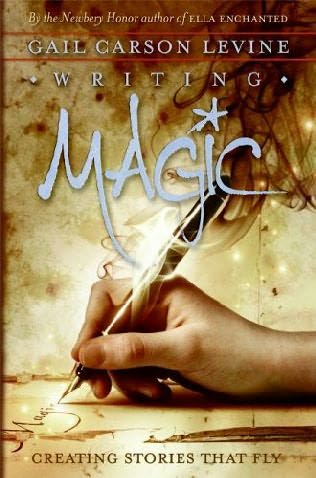
It’s no easy task, getting most kids to write a paragraph, much less a full creative story. That’s why I felt like I’d uncovered a treasure, when I happened upon Gail Carson Levine’s Writing Magic: Creating Stories That Fly. It was parked on the same shelf near a biography of J.K. Rowling that I was checking out for my kids.

We’ve long been fans of Gail Carson Levine’s Newbery Honor work, Ella Enchanted, one of the rare children’s books that survived being transformed into a movie. In fact, it was the movie, starring Anne Hathaway, that got me reading the novel, along with my daughters. Amazing! Levine’s writing is magical, and she doesn’t keep her methods secret. She willingly shares writing tips in classes she teaches to children and adults, as well as on her blog.

If you have a budding young writer in your family (or if YOU are longing to create fiction), Writing Magic is sure to inspire. It’s filled with writing advice, story starters, and most of all, encouragement. Levine believes writing should be fun, and if it’s not, then something is wrong!

In the first chapter, Levine lists her seven rules for writing:

1. The best way to write better is to write more.
2. The best way to write better is to write more.
3. The best way to write better is to write more.
4. The best way to write more is to write whenever you have five minutes and wherever your find a chair and a pen and paper or your computer.
5. Read! Most likely you don’t need this rule. If you enjoy writing, you probably enjoy reading. The payoff for this pleasure is that reading books shows you how to write them.
6. Reread! There’s nothing wrong with reading a book you love over and over. When you do, the words get inside you, become part of you, in a way that words in a book you’ve read only once can’t.
7. Save everything you write, even if you don’t like it, even it you hate it. Save it for a minimum of fifteen years. I’m serious …

Levine goes on to explain that last rule. She said she used to think she’d always remember what it felt like to be a kid, but she discovered (as we all do) that you forget the details. The only way to absolutely remember how you feel being a child is to write as a child, and then save those writings.

She further explains:

When you become a teenager, you step onto a bridge. You may already be on it. The opposite shore is adulthood. Childhood lies behind. The bridge is made of wood. As you cross, it burns behind you.

If you save what you write, you still won’t be able to cross back to childhood. But you’ll be able to see yourself in that lost country. You’ll be able to wave to yourself across that wide river.

As a mother, I’m always trying to get my children to write in journals. It’s worked for some of my kids, who love to record their memories, but not for others, who would rather be doing ANYthing but writing. Seeing Levine explain it all so clearly reminded me that someday, if their journals survive the years, they’ll appreciate being able to “wave” to themselves across the bridge from adulthood back to their childhoods.

I haven’t always been good at keeping a journal, though it’s a practice I’ve become passionate about the last fifteen years or so. For me, it’s a connection to my spiritual life, to God, because when I put ink to paper I can block out the distractions of the world (most of the time) and enter into my Quiet Place, where I find the strength and joy I need to face my day. I think kids also benefit greatly from being able to sort out their ups and downs in written form. Diaries are also fascinating raw material for creating fiction.

In Writing Magic, Levine explains why she writes fiction, which I enjoyed reading about. She writes for several reasons: to enjoy the power of creation, to tell a good story, and to make discoveries — about herself and others. As parents, if we can pass along this desire to create through words, we’ll be enabling our children to make their own discoveries. What a noble calling!

Throughout this book, Levine uses examples from her own novels as well as other famous children’s works, to clarify her points. I loved being able to enter into her thought process, as to how she came up with her ideas for books such as Ella Enchanted, Fairest, The Wish, and others. She also offers advice on how to come up with interesting characters and plots that will hook readers, as well as how to inject humor into your writing. Finally, she shares her own publishing journey, and encourages her readers to persevere in getting their work out there.

Levine closes every chapter with two simple commands: “Have fun!” and “Save what you wrote.” She also ends her posts the same way in her blog for young writers. It can’t get much simpler than that.

I hope you get a chance to pick up a copy of Writing Magic. Here’s what the author says on her website about her own book:

When I wrote Writing Magic I’d been teaching creative writing to wonderful middle school kids for six years.

I love to talk, teach, and write about writing. I made up prompts, and we tried them together. If a prompt worked for me, it worked for them, and vice versa. I invented a few prompts just for the book, but almost all are workshop tested, just as you’d expect recipes in a kitchen to have been cooked at least once. I love dreaming up prompts, and they’re probably my favorite parts of the book. Writing Magic is my only banned book, as far as I know. It was banned from middle schools in a district in Illinois because I advise readers to make their characters suffer. In my opinion, a how-to about writing that advised against making characters suffer—that would be the book to ban!

Ha! See? You’ll love this book.

You can read more about Gail Carson Levine on her website or blog.


July 27, 2011

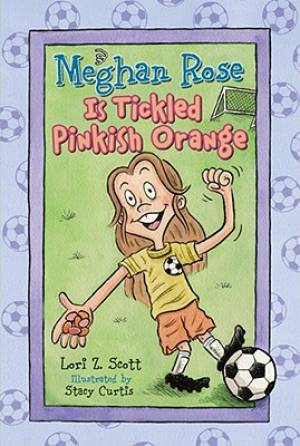
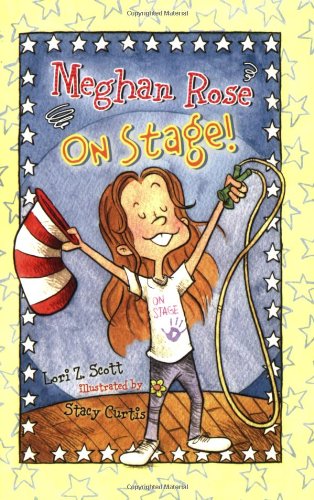
Hello friends! I hope you’re surviving the heat this summer. Time is flying for us, and my kids are heading back to school next week. Today, I’m excited to share with you an interview with children’s author, Lori Z. Scott, who writes humorous middle grade fiction, especially for the inspirational book market.

Welcome to Mom 2 Mom Connection, Lori! Can you tell us a little about how you balance your roles as mom and writer?

Being a mother is my highest calling in life. And that means I’m a caregiver, nurse, tutor, cheerleader, counselor, transportation expert, and nutritionist. Doing all those mommy things is a bit like stuffing a sock with pineapples. It’s a stretch, but I pursue my own interests in the empty spaces around the pineapple. I think moms should realize that it’s okay to put the mommy part of our lives first and to trust that God will still bless, fulfill, and lead us in other areas as well. He’s full of surprises that way.

I also teach second grade. Since graduating from Wheaton College, I’ve taught school for longer than I care to remember. I’ve worked mainly with kids in kindergarten, first, and second grade. Teaching has been such a huge part of my life. I guess I’m just not ready to give up playing games and reading comic books yet.

Finally, I’m an author. My students get a big kick out of this, and love having my books in the classroom. We talk about writing a lot, and experiment with patterns and words. By the end of the year, they all view themselves as writers.

That sounds wonderful! I’m sure you really inspire your students with your own publishing success! How did you get started writing for children?

I started writing almost by accident. When my kids were little, we often went to the library to hang out. One day when we were there, I saw a flyer for an amateur science fiction/ fantasy writing contest. I decided to enter. Keep in mind, I hadn’t done any writing for probably fifteen years (except letters to my grandma). In high school, I wrote for our yearbook and school newspaper, and really enjoyed it. But I played volleyball in college, and between practice and studies, barely had time to sleep let alone write. I forgot how much I loved playing with words. I forgot how writers both lose and find themselves in those words.

Oh, I love the way you put that! We “lose and find ourselves in words.” So what happened next?

I entered the contest anyway, and won second place. Encouraged by my success, I tried the MOPS International story writing contest…and WON! After that, I joined a writer’s group, learned more about the writing industry, and started publishing short stories, poems, devotions, and personal essays. I didn’t realize it (God did, of course), but writing those short pieces helped me build both the confidence and skill I needed to later write children’s chapter books.

Do you remember the moment you felt inspired to begin writing the Meghan Rose series?

When my daughter was in first grade, her teacher started reading the Junie B. Jones books in class. Since Meghan liked them, I picked up a few copies. I enjoyed the humor in those books, but when Meghan started acting and talking like Junie B., I started editing out those grammar slips, name calling and bad attitudes…and looking elsewhere. I thought there had to be an alternative choice—a book that was just as funny, but also had a good take-away value.

At that time, most Christian bookstores didn’t carry fiction for that age group, only devotional books and Bible stories. I ended up empty-handed and frustrated. Eventually, at my daughter’s urging, I wrote the book I couldn’t find — a book just for her. I put in everything she wanted — an interesting story filled with giggles and characters worth rooting for — and everything I wanted — good moral values (but with nothing preachy about the story at all). (I hate preachy, I love amusing.) BLAM! Inspiration!

Now fast forward a bit. At a writing conference, my hunt for good fiction came back to mind. Almost on a whim, I wrote up a proposal for a whole series based on the book I wrote for my daughter. After all, I knew there had to be an untapped market because I WAS part of that untapped market. I also felt somewhat qualified to fill the gap because of my extensive experience working with children. I pitched the idea to editors, and eventually landed a contract for the series.

Sounds like you wrote something from the heart, then did your research and found the perfect market niche, Lori!

One thing I find interesting is that when the Meghan Rose series was first released, there were very few Christian fiction titles available for the K-2 age group. Now you can find a handful of other options out there, and I’m guessing (and hoping) more on the way.


Yes, I hope so too. I’m also part of your target market, a mom looking for books that are fun to read, yet will also encourage good character in my kids. How would you describe this spunky little girl, Meghan Rose?

When I started the series, I wanted a character that was likable but flawed, outrageous but clever, passionate but sensitive all rolled into one. I wanted someone who didn’t know all the answers, but was willing to look for them. In a nutshell, I wanted someone just like my own daughter. Since I never intended on publishing the books and originally wrote them just for her, I actually used her as the foundational basis for a fictional character. I even used her name!

I’m sure she was excited to see her name on the book covers! What age group are you gearing the books toward?

They’re geared for kids in grades K-2, the age I’ve worked with the most. But I have had older kids who enjoy reading them too. Although it’s a series, each book can be read as a stand-alone adventure. Each book has an overall theme, such as friendship, patience, joy, honesty, or humility. These concepts are NOT preached, but subtly woven into the storyline. There are discussion questions and activities at the end of the book for those parents (or children) who want to continue to explore the theme. Some homeschool parents have especially appreciated this feature.

Also, the books are not just for girls! A mother of two boys once emailed me about how much her sons enjoyed reading them with her. She said they could hardly read for laughing so hard — they were all HOWLING!! The youngest one loved it so much he started sleeping with the first book under his pillow at night.

In fact, the comment I hear most from people who read the books is, “I laughed out loud.” The second comment I hear most often is about how much kids (and parents) like the discussion questions and activities. How can all that just be for girls?

That’s true! I read them out loud to my son and daughter, and we were all laughing at the crazy scrapes Meghan Rose finds herself in. How do you think your series distinguishes itself from other books available for this target age group, such as the Junie B. Jones series?

My books are geared specifically for a Christian audience. Also, since I spend so much time with this age group, I am very much aware of the challenges they face, the way they think and talk, and the questions they struggle to answer. I think that lends a certain amount of authenticity to the stories. Plus I don’t use words like “stupid”. Overall, the books are heavy on the humor and very, VERY light on the lesson…yet neither quality is lost on the child.

I love how Meghan and her mom discuss prayer and seeking God for answers to problems. Can you share with us an example of how parents can use your books to teach prayer to their own children?

Let me relate my own experience with the stories. As I mentioned, I wrote them for my daughter. Since she is the type to imitate people she likes, she began copying some of the fictional Meghan’s actions. That included prayer. I remember when she was in maybe third grade, she came home from school one day and said, “There’s a mean girl on the playground that I don’t like. I was going to say something mean to her, but then I thought what would Meghan Rose do? So I prayed about it instead. And then I talked to her and made friends with her.”

Wow! She had turned to prayer on her own and then solved her own problem. I never expected the books to have that kind of impact on her thinking, but they did. So as far as parents using the book, I suspect just reading and discussing how Meghan works out her problems might do the trick.

In the back of the books, you offer discussion questions and activity ideas that are fun and helpful for parents and teachers. How do you come up with these ideas?

That’s the teacher part of me flaring up big time! LOL. The ideas come from years practice in the classroom. Kids love extending the story experience by creating their own volcanoes or whatever. I also put a ton of other ideas for parents and kids on my website under the BLAM (Brilliant Little Activities to Make) link.

But seriously, I added that section so parents can capitalize on the book’s underlying message. I mean, how many times have you as a mother read a book and thought, “There’s a good lesson in here” but didn’t know how to draw your child into a discussion about it? I remember reading Where the Red Fern Grows with my daughter and wanting to talk about death and sacrifice. Since I didn’t know where to start, I couldn’t fully take advantage of that teachable moment. (Instead we both just wept all the way through the last few chapters.)

Can you tell us more about your journey to publication? Did you write the books with a certain publisher in mind, or did you seek an agent first?

Like I mentioned earlier, I started with contests, moved on to publishing for magazines, e-zines, and book anthologies, and then finally into writing books.

I guess I’m not a typical writer. I don’t write every day, nor do I have thousands of notebooks filled with stories. When I write, I find a need and fill the need. That means when I write a piece, I have a specific publication, along with their wish-list, style and guidelines, in mind. And please don’t laugh. I don’t have an agent. My bread-and-butter writing goes mostly to magazines, and I don’t need an agent for that. The book series was a complete surprise, and I still haven’t gotten around to finding an agent. However, I feel like Standard (my publisher) has been very supportive, generous, and fair.

How many books are in the series now, and do you know how many more you plan to write?

Right now, there are eight books in the series. Apparently, they have been well received. They have reached the bestselling status!

That’s awesome — congratulations!

Thank you. As far as more books go, that’s up to God and the editors at Standard. Standard is considering more Meghan Rose titles and possibly a spin-off series starring Ryan, the main boy character. I have two Meghan Rose and two Ryan Baker stories drafted. I’ve outlined a third Meghan Rose story, which I hope to draft before school starts. I have titles and themes for a dozen more books, but those will have to wait for next summer since I’ll have little time to write during the school year.


Lori, your writing inspires all of us who are busy moms with a desire to write. Can you give us any advice on how to carve out a writing life in the midst of raising our families?

I think the first thing to keep in mind is that everyone’s writing journey will look different. What works for one writer might not work for you. With that said, here are some suggestions:

1. If you’re very determined to write, be prepared to lose sleep over it. Get up early before the kids are up or stay up late when they’re in bed.

2. Carry a notebook with you. If you have to sit through a practice or wait for school to let out so you can pick up your children, that notebook gives you the opportunity to write wherever you are. Those slots may be 10 minutes or 45… but that time is wasted if you’re just sitting. If an idea comes to you, write it down as soon as possible. I’ve used lots of napkins and envelopes in my day! Plants grow inch by inch. So do stories. Keep a notebook next to your bed too. Sometimes when you’re drifting off to sleep, your mind will work out a glitch in your story.

3. Don’t be afraid to start small. Writing devotions, for example, can teach you to make every word count since they generally run anywhere from 150-250 words in length.

4. Join a writer’s group if you can. They offer support and encouragement. Sometimes they will alert you to writing opportunities. If you can’t (sometimes it’s hard to find a decent babysitter!), then look for an online writer’s group.

5. Write with your children. I remember times when I sat down with my young kiddos and we all had notebooks. We wrote our own stories and drew pictures. An hour later, we’d share our work. The kids loved it. (Side note: my children are older now, and still love writing.)

6. Exercise. Believe it or not, I’ve written whole articles in my mind while running.

Wow! These are some great tips! You’ve really gotten me motivated to get writing with my kids. I have one more question — do you have a favorite quick meal you put together when you’re in a deadline crunch, yet you know the people in your house need to eat? Would you mind sharing with us your recipe?

My secret recipe is called “Run to WalMart and buy a roasted Rotisserie chicken.” I usually throw in baked potatoes, bread, and a vegetable. It’s ready in 10 minutes.

Ha! So I’m not the only one who is rescued by those ready-made meals!

Fun aside, if I’ve got deadlines approaching, I cook ahead. That way when it’s time to eat, I can just throw it in the oven. My favorite is homemade pizza. I use a bread machine to make the dough. I roll the dough out, prick it, and bake it at 375 for 15 minutes. While it bakes, I brown some Jimmy Dean’s hot pork sausage. When the crust is ready, I add Ragu pizza sauce, the sausage, and cheese. Then I bake it for 15 more minutes.

Homemade pizza sounds delicious!

Another quick and hearty meal isn’t a recipe, but a package. Bear Creek has a variety of wonderful powder-form soups available. I throw in whatever meat I want (ham for the potato soup, chicken for the tortilla soup, hamburger for others) and add a loaf of bakery-bought bread. It’s fast, inexpensive, and very yummy.

These are GREAT ideas, and very practical for any busy mom! Thank you so much, Lori, for all of your inspiring advice. It’s been a joy getting to know you better. We wish you all the best as you continue to share your faith through writing, teaching, and parenting.

You can learn more about Lori Z. Scott and her popular Meghan Rose series at her website, which also includes games, jokes and activities for parents and teachers.


June 22, 2011


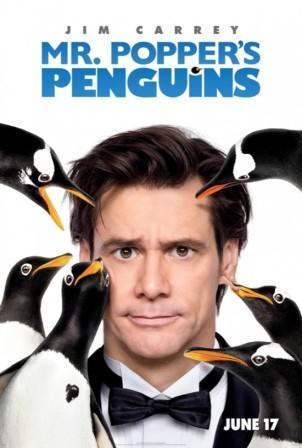
I hope you’re having a relaxing summer. I’m enjoying a break from the school routine, but I have little time to relax. This month, I’ve been completely consumed by a household full of kids and teens, and we’ve also added four baby goat “kids” to our menagerie. The word “kid” now has two meanings for me. These babies must be bottle-fed several times a day, yet they act like impish toddlers who are into EVERYTHING and don’t want to stay in their playpen. Baby goats are lovable and cute — just like the penguins in this film.

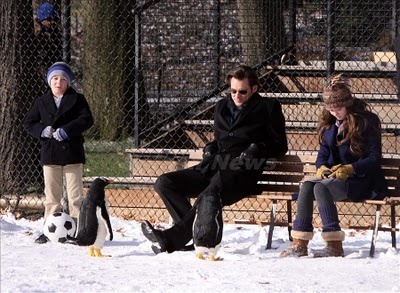
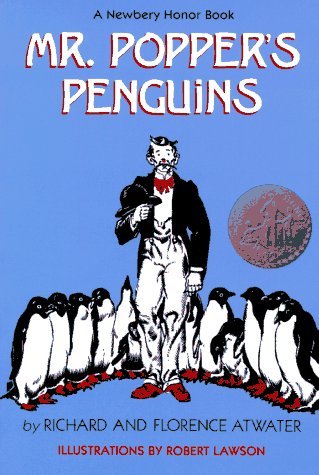
Getting to the movie theater to see Mr. Popper’s Penguins was pure escape for me. Of course, you know I had to see it — a movie based on a classic work of children’s literature! And a Newbery Honor winner at that! Though the plot of the movie deviates from Richard & Florence Atwater’s 1938 work, the screenplay is well written, and it’s thoroughly entertaining for all ages.

Jim Carey plays Tom Popper, a divorced New York realtor who excels in his job making high-end real estate deals, but is a lousy parent. You don’t want to miss the first five minutes of this movie because it shows scenes from Tom Popper’s childhood where he was also consistently disappointed by his absentee father — who traveled the world, sending back snow globes and other souvenirs, but missed important events like Tom’s birthday. History repeats itself.

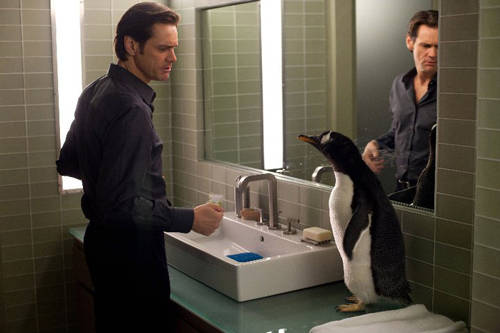
When the grown-up Tom Popper receives word that his father has passed away, he learns his father has left him one final souvenir: it arrives in a wooden crate at the door of his luxury apartment. Tom thinks it’s a stuffed penguin, until the creature begins to move. He immediately contacts the zoo to come pick it up, and he puts the penguin into a bathtub full of ice cubes, thinking he’ll be sending it out the door soon.

Later, another crate arrives with five more penguins, and then his own family shows up to celebrate his son’s birthday. They’re in for a surprise when they see the apartment full of penguins. His son and daughter immediately fall in love with Dad’s new pets, and even his ex-wife is impressed at Tom Popper’s new role as faithful pet owner.

All kinds of adventures follow, as the zoo keeper is now determined to capture the birds, but Tom decides to keep them because his kids actually enjoy hanging out with their dad now. He even begins to break through the “OMG frowny face” texting world of his 13-year-old daughter, which is a miracle in itself, as any parent of a teen daughter can attest!

To keep the penguins alive, Tom Popper turns his apartment into a winter wonderland. Yet he’s determined to stay on top of his career, which involves convincing the owner of Central Park’s Tavern on the Green (played by “Murder She Wrote” actress Jessica Lansbury) to sell to his corporation. But she won’t sell until she finds the right kind of buyer, one with a big heart.

The penguins lay eggs, and Tom’s heart grows as he and his kids watch the eggs hatch. Slowly, he and his wife seem to be reconciling their relationship, and the kids are thrilled. The theme of this movie is all about keeping family together, and for this reason alone, it’s a great movie. This is the kind of film teachers will want to add to their Friday afternoon “pizza party” collection — it can be shown in the classroom without needing to have the fast forward remote close by. There are so many hilarious scenes and nothing to make a teacher squeamish about showing her students.

Besides the wonderful theme, Mr. Popper’s Penguins has an artistic quality that’s unusual for kid-friendly movies. The colors are relaxing, lots of blacks and whites with bold dashes of color sprinkled in like a painting. In one scene, Mr. Popper and his ex-wife are both wearing black, and her new boyfriend looks out of place in brown — you just want him to get out of the picture! The film is icy cold and uncluttered, a perfect escape from the heat of summer.

Jim Carey is so funny, our whole theater was laughing. Also, you don’t want to miss the closing credits, which show cartoon penguins dancing to a new rendition of “Ice Ice Baby.” All of us Gen-X parents who came of age in the 80s will remember this beat.

The best part about the film is that I believe it will fuel interest in the classic book, Mr. Popper’s Penguins. When we got home from the theater, my 11-year-old daughter immediately pulled the book off a shelf in her room, settled herself in our big rocking chair, and began reading it out loud to her younger siblings. THAT is what made it worth the effort and expense of going to see the movie.

I hope you’ll take your kids to see it — and let’s send the message to Hollywood that we LOVE movies made from the best of children’s literature!


May 10, 2011


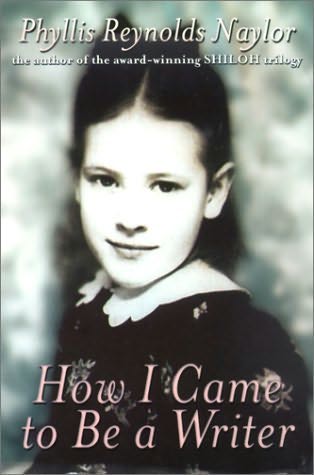
Last weekend, I was looking for something fun and short to read, and a quick glance around my home led me to Phyllis Reynolds Naylor’s How I Came to Be a Writer. It’s been years since I picked it up, and while reading it this time, I felt like I was cast under the author’s spell, though outwardly I kept one eye on guinea pigs, children, and a tennis-ball chasing dog frolicking around our sunny backyard.

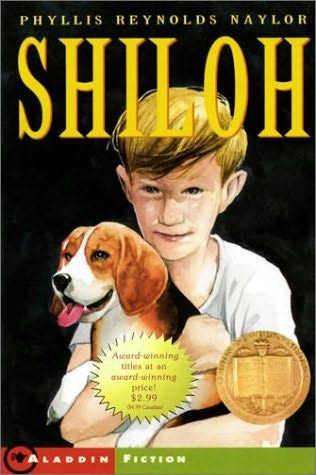
In fact, the whole time I was reading it, I kept thinking, I’ve got to blog about this! There must be one of you at least who needs a jolt of writing inspiration, and this is the book to do it. Have you heard of Phyllis Reynolds Naylor? Her most famous work is Shiloh, which won the 1992 Newbery Award, but her long writing career has spanned seven decades as she’s penned over 130 books for readers of all ages. She’s definitely a good mentor for anyone longing to pursue the publication of fiction.

Ms. Naylor’s first writing break came when she was only 16 years old, and a former Sunday school teacher wrote to ask if she’d be interested in submitting a story to the church school paper she now edited. Right away, Phyllis came up with a sentimental baseball story called “Mike’s Hero.” Her teacher-turned-editor loved it and bought it for $4.67. (Since Phyllis was born in 1933, I’m assuming this happened around 1949.) She kept contributing more stories to church papers and magazines, then started her own humor column, told from the point of view of a 15-year-old boy named P.R. Tedesco. She wrote this for 25 years, and it helped her find her voice as a humor writer, as she describes:

Because I could write about anything at all in the column — friends, fears, parents, school, God — ideas were not hard to think up. By the time I discontinued the series, I had learned to write about serious subjects — segregation, prejudice, capital punishment, and the Vietnam War — in a sardonic way that would still interest teenage readers. The most difficult problem, strangely, was answering an occasional fan letter like this one:

Dear Mr. Tedesco,
You really tell it like it is, Man! What does your girlfriend think of your writing?

Naylor made the shift to publishing books in 1965, by submitting a selection of her short stories, which came out under the title, The Galloping Goat and Other Stories. This led to a another collection of short stories, and then at last, a contract for her first novel. I love how she describes the journey of moving from writing short pieces to writing a whole novel — since this is such a struggle for many writers. She said at first she made the mistake of “trying to throw in everything but the kitchen sink,” which caught the attention of an astute editor, who asked her to revise it. She rewrote the whole book following the editor’s suggestions for improvement, and What the Gulls Were Singing became her first published novel in 1967.

And she’s kept going. What I love about this autobiography is that Phyllis includes many of her early writings and then describes how she would improve them. She’s a writer who never stops growing, and this inspires me, because I can see that writing is a worthy passion of a lifetime. She didn’t stop and sit back on her laurels when she won the Newbery in 1992. She kept on going — in fact, Shiloh was only one book in the Shiloh trilogy.

Go Phyllis.

She is not a one-book wonder, like some of the great writers I’ve read in the past year: Margaret Mitchell, Harper Lee, J.D. Salinger. Here are authors who wrote one book and then lost the magic, or the muse, or whatever it took to get their work out there. Phyllis is nearly 80 years old, and she’s still writing. Her latest book came out this year.

I couldn’t find a website under her name, but I found that she’s actually blogging here at Alice McKinley.com. Alice is a character from another one of her popular book series, and is based on her own life. At this point, she’s published 27 books in the series, and she’s going to end it at book 28. From glancing through the blog, I can see she’s extremely popular in Germany. In fact, one of her fans wrote that she couldn’t stand the length of time she had to wait until the books were translated into German, so she learned to read them in English.

I’m not familiar with the Alice series, so I’m unable to endorse their content, but can’t we as writers learn something from an author who’s won the top award in children’s literature and kept on going to reach the hearts of readers? On her blog, Phyllis Reynolds Naylor says this about her writing process:

I guess they “just come to me.” I don’t have any process. I simply try to become whichever girl I’m writing about–the whole girl–what her family sees of her, what her friends see, how she feels inside, what she worries about–all the things that are going on in her life. Writing is always “striking a balance” with humor, serious stuff, body worries, boyfriend problems, philosophical questions…. I have a very good memory of myself growing up and what was happening to me–what I was thinking about–at all ages, and these probably form the basis of my books.

I would love to hear Phyllis Reynolds Naylor speak at a conference someday. I wonder if she still gets out and speaks. She is someone like Katherine Paterson, whose keynote I heard in New York several years ago, and it still stays with me. I don’t know that I’ll ever find the courage to finish the novels I’ve started and abandoned, like orphaned children, on my computer, but at least I’ve been inspired to share her journey with you!

And it all began with this little girl, Phyllis, being read to by her parents. Her father would act out voices as he read Huckleberry Finn, and her mother kept reading great books out loud well into her children’s teen years.

Which reminds me — summer is around the corner. And I know the perfect book to start reading my 8-year-old son as soon as school is out. I have it sitting here right beside me, and I’m thinking maybe I’ll even start reading it tonight.

Care to join us?


February 11, 2011


In yesterday’s Publisher’s Weekly, I read the sad news that Dr. George Edward Stanley, children’s author and professor of languages, passed away suddenly at the age of 68. Dr. Stanley was one of my first writing teachers when I signed up to take a correspondence course at the age of 20 from the Institute of Children’s Literature.

He asked me to address him simply as “George,” and I’ve kept his letters and notes from my course assignments these past 20+ years. Now, of course, I treasure them even more. Dr. Stanley was a wonderful mentor for me, and his early encouragement helped keep my writing dreams alive. Although I have yet to publish my own children’s novel, I still live as one devoted to the world of children’s literature, especially as the mother of five kids who love to read great books.

I wanted to share with you some of George Edward Stanley’s many accomplishments that I found on a memorial page devoted to him:

George graduated from Memphis High School in 1960. He took his B.A. (1965) and his M.A. (1967) from Texas Tech University. His Doctor Litterarum (1974) in African Linguistics is from the University of Port Elizabeth [now Nelson Mandela Metropolitan University] in South Africa.

It was while he was a Fulbright professor in Chad, in central Africa, that Dr. Stanley began writing fiction. About the only diversion he found available in that nation’s capital city of N’Djamena was listening to the BBC on his short wave radio. That led to his writing radio plays for a program called World Service Short Story. Three of his plays were eventually produced and so began a lifetime of entertaining and educating children and young adults.

After writing and publishing over 200 short stories in American, British, Irish, and South African magazines and linguistics articles in major international journals, Dr. Stanley turned to writing books. He wrote more than 100 books for young people and one book on writing, WRITING SHORT STORIES FOR YOUNG PEOPLE.

Dr. Stanley was also working on several other books for young people, as well as textbooks for teaching Arabic, Hausa, Indonesian, Persian, Swahili, and Urdu.

Dr. Stanley was a Professor of African and Middle-Eastern Languages and Linguistics in the Department of Foreign Languages at Cameron University. At one time or another he has taught all the Germanic and Romance languages, in addition to African and Middle-Eastern languages.

I also found a listing on his home page at Cameron University of over 100 children’s books he published, including books written under his own name as well as several well-known pseudonyms.

Still, out of all these many accomplishments, the fact that he found time to work with unknown, fledgling writers through a correspondence school shows how dedicated he was to the field of children’s writing. I know that he’ll be greatly missed by all of his current and former students, as well as those who knew and loved him.

His funeral is today in Oklahoma. May he rest in peace, and may his life’s work continue to be an inspiration to those who follow in his footsteps.


November 22, 2010


As a former English teacher and bonafide bookaholic, I’m always seeking like-minded souls who embrace classic literature. So you can imagine my joy when I stumbled onto The Red Blazer Girls, a brand new middle grade series, written by high school English teacher Michael D. Beil, whose characters are smart, wholesome, and literary.

I really wasn’t looking for anything new to read. My nightstand is already so full of books, I can hardly find my alarm clock. But as I breezed through the library with my kids the other day, The Ring of Rocamadour (book 1 of the series) jumped off the shelf at me. I couldn’t resist when I opened it up and read the first paragraph:

For as far back as I can remember, I have told everyone I know that I am going to be a writer. And it’s not just some idle dream. I have been a busy girl, and my hard drive is bulging with the results of this ambition: a heaping assortment of almost-but-not-quite-finished short stories and at least three this-time-I’m-really-off-to-a-great-start-and-I-mean-it novels. Unfortunately, every single thing I have written — until now, that is — is fatally flawed.

Ha! Did Mr. Beil sneak over to my house and read my diary? Or, since this is his debut novel, are we actually reading his diary?

This snappy writing continues throughout the book, and I couldn’t put it down. So, who are the Red Blazer Girls? Well, although the book cover only shows three, there are actually four girls in the group, in the seventh grade at New York City’s exclusive St. Veronica’s School: Sophie, Margaret, Rebecca, and Leigh Ann. In The Ring of Rocamadour, the girls find themselves caught up in a mystery when the quirky Mrs. Harriman asks for their help solving a 20-year-old puzzle. She’s seeks clues to a treasure hunt initiated by her father for the sake of his granddaughter, on her 14th birthday. Unfortunately, he died before giving her the card, and the birthday gift has never been found.

The Red Blazer Girls are in, and their adventures involve digging through old volumes of the Harvard Classics, quizzing their English teacher on his vast knowledge of Charles Dickens, and even math equations. In fact, several pages of the book take readers through a math problem that made the subject exciting and fun — even for me! I probably haven’t thought about the Pythagorean theorem since high school, but it comes in handy when the girls are trying to pinpoint a secret spot where the next clue may be hidden.

Sophie is an amazing narrator — I love her! I want more books narrated by her. Here’s what she says about herself:

Another confession: call me a geek if you must, but I just love books. I am absolutely obsessed with them. Go on, name any kids’ book or series of books, and I probably have it. I spend so much of my allowance at the local bookstore that Margaret thinks I have some kind of compulsive shopping disorder … Nothing against the library, but there’s something different about having the book within reach when, say, I absolutely need to go back and reread that part in Anne of Green Gables that makes me cry every time I read it. (And speaking of books, if you’re the person who borrowed my well-worn but much loved hardcover copy of The Secret Garden, please return it — no questions asked.)

Ooh… I love this writing. I can see why an acquiring editor at Knopf fell in love. As soon as I finished the first book, I had to start right away on the next one The Vanishing Violin. The clues here involve more verbal logic than math, but I also found this book a fascinating read!

I predict middle school English teachers and librarians will snap this series up — and hopefully publishers will keep up the trend of bringing out books that expand minds and build character in readers.

The Red Blazer Girls are good wholesome reading for girls — with no sleaze or vampires. Thank you, Mr. Beil! Keep ‘em coming!


November 16, 2010

Every year, I read hundreds, perhaps thousands, of picture books, yet I rarely take the time to review them. Usually my eyes are propped open as I mumble my way through “just one more story!” to my two younger kids, who love finding another excuse to stall their bedtime.

And then a book like One More Acorn comes along, and I feel like I’m holding a little bit of magic in my hands.

The story itself is enchanting. It’s autumn in Washington DC, and a gray squirrel named Earl must scamper through town to find food for his family. He knows he’s hidden a big acorn somewhere, and he’s off to find it. His wife and children are waiting for him in their small blue house perched high on a tree limb.

As we journey with Earl, we see the beauty of our nation’s capital, lit up with the golden colors of fall. The illustrations are bright-hued and yet soft and muted at the same time. Earl happens upon a “Children’s Day Parade” in which children are encouraged to plant a tree.


And here we come to a dilemma: the children see a big acorn that would be perfect for planting — yet it’s also a potential hearty meal for our hard-working squirrel, who has hungry mouths waiting to be fed at home. What will happen to the acorn? Tee hee. I won’t tell you. Go to your library and check it out. (Or buy it if you can’t borrow it.)

Reading One More Acorn gave me a chance to talk about our nation’s capital to my children, pointing out the various monuments and scenic locations in the pictures. But what truly drew me into this book is the Author’s Note at the back of the book.

I usually read these to myself, but that night my kids begged me to read it to them, so I did. Wow. Here’s the story. You know that book, Corduroy, about the little bear who’s missing his overall button? Well, it was written by Don Freeman, who wrote and illustrated many well-known books for children.

Don Freeman died in 1978, leaving behind his sketchbooks, notebooks, and unfinished works in the care of his only son, Roy Freeman. Decades later, Roy discovered the handwritten text and rough sketches of this squirrel book, which his dad had begun in the early 1960s during a trip to Washington DC. Don Freeman apparently abandoned the project after John F. Kennedy was assassinated.

So, thirty years after his father’s death, Roy Freeman found the vision to complete the second half of his dad’s book, enlisting the help of talented artist, Jody Wheeler. The resulting creation is truly a work of art.

I think this would make a wonderful read-aloud book for teachers and librarians, especially as we celebrate the colors of fall and teach children about the change of seasons. From a child’s view, acorns are fun to pick up and collect in coat pockets, but from a squirrel’s view, acorns are food.

One More Acorn is a quiet book. I’m a person who likes to read quiet books to my children. That’s a phrase I learned from author Jane Yolen at SCBWI last spring — she said it’s getting harder for writers to publish quiet books these days. There are no Disney movie tie-ins, flashy pop-outs, or over-the-top humor. Just a quiet story — of a little squirrel, and of a son, finishing up the good work begun by his father.

I’m very thankful we discovered it!


November 2, 2010

I confess. I’m excited Jeff Kinney’s latest installment to the Diary of a Wimpy Kid series releases next week! November 9th to be exact. If you’re the parent of an elementary school-aged boy, you get it. Right?

These books are funny, and they’re delightfully inexpensive hardback, so they can handle the wear and tear of being passed around from kid to kid.

I didn’t realize how hugely popular these books were until we were visiting friends in Portland last fall. I rode in the back of a mini-van to the Oregon seacoast with my friend’s two young sons, along with two of my own children. We passed the time by reading Dog Days out loud and playing “Cheese Touch.” This was the first book my then six-year-old son read all by himself. They’re fun for kids to read — and they appeal to the parents on a different level. (I love the mom in this series. We think alike!)

Although I wasn’t too crazy about the movie, (I thought Roderick was way too scary and mean), the books are much better. I haven’t seen a copy of the new purple one, so I’m clueless about what’s inside. But I’m sure I’ll toss one into my cart when I’m rolling through Wal-Mart.

If you’d like to meet Jeff Kinney in person, check out his website for details of his Ugly Truth bus tour. Here are the cities where he’ll be stopping:

Monday November 8–Dallas, TX

Tuesday November 9–Austin, TX LAUNCH EVENT

Wednesday November 10–Little Rock, AR

Thursday November 11–Memphis, TN

Friday November 12–Nashville, TN

Saturday November 13–Birmingham, AL

Sunday November 14–San Diego, CA

I read that he doesn’t do school visits, so if your kids want to meet him, here’s your best chance!


August 31, 2010


I’m excited to welcome a brave and talented guest today whose writing has led her to read with the wolves! Robyn Hood Black is the author of two children’s books, Wolves (Dalmatian/Intervisual Books) and Sir Mike (Scholastic/Children’s Press). She’s had poetry published in Welcome Home and Hopscotch for Girls, and she also has poems slated to appear in Berry Blue Haiku and Ladybug. In addition, Highlights Magazine will publish Robyn’s short story in 2011. I met Robyn at an SCBWI conference, and I’m thrilled she’s come to share with us her expertise!

Hi Robyn. How did you get started writing books for children?

As soon as I was old enough to put crayons to paper, I was making up and illustrating stories. I’ve always wanted to write children’s books. I made a (not so good) one as an art project in high school, and I think my first submission to a publisher was while I was in college. That manuscript was not so good, either!

I sought out opportunities to write at every stage of life, from school newspapers to community newspapers to church newsletters and local magazines, and I’m grateful for what I learned with those bylines.

It sounds like you’ve experienced it all in the world of writing! Do you think it’s helpful to build up a variety of writing experiences before tackling books?

For me, it was. When writing for any kind of publication, you have to think about audience and deadlines and making every word count — and working with an editor. When I got the contract to write WOLVES, which was part of a series, it had a very tight deadline. A writer friend looked at what the publisher wanted and the time frame, and she shook her head, saying, “I would be so overwhelmed…!”

I laughed and said I would be drawing upon my inner newspaper reporter — I knew the person who could crank out eight or more feature stories in a week in her 20s was still inside somewhere. And she was.

Wow — writing eight stories a week is a lot to keep up with! Were you influenced by any particular authors of children’s books along your writing journey? Who were your favorite authors when you were a child?

I remember riding my bike to the library as a kid growing up in Florida, and it always seemed like a magical destination. When I was very little, I loved P.D. Eastman’s Are You My Mother? and The Poky Little Puppy by Janette Sebring Lowrey. I loved Jean de Brunhoff’s Babar books.

Oh, my kids love those same books too!

Also, I would play those Disney storybook albums (kids today might not even know what an LP looks like!) and act out the stories as I turned the pages and took in that wonderful art. I remember appreciating Judy Blume’s Are You There God? It’s Me, Margaret when I was the right age for it, and Emily Neville’s It’s Like This, Cat.

I collected fiction and nonfiction books about animals, too, such as Walt Morley’s Kavik the Wolf Dog, all kinds of cat books, and Joy Adamson’s lion books. I still have most of those books, and the records!

What a wonderful collection you must have! OK. Let’s talk about WOLVES! Over the summer, I read Jean Craighead George’s 1973 Newbery winner, Julie of the Wolves. How did you begin working with wolves?


Jean Craighead George has always been one of my heroes. She turned 91 this summer, I believe. Getting the contract to write a book about wolves was a dream come true. I learned so much during the research (and I’m still learning!).

While writing the book, I wanted to observe/photograph/sketch real wolves. I discovered that the Chestatee Wildlife Preserve in Dahlonega, Georgia — not far from my home — had a couple of wolves at that time. I visited them, and the next spring (2008) met two female pups born there, Juno and Luna.

They were four weeks old, and I immediately filled out the paperwork to volunteer there. I’ve worked with animals my whole life — mostly my own and also as a volunteer — and I’ve been lucky to have friends who are professional trainers.

I see the cover of your book, which is WOW KINDA SCARY, and then I see pictures of you hanging out with wolves. Have you ever felt like you were in any danger?


That is a striking picture, huh?! Illustrator Colin Howard did a terrific job. To answer your question, No, BUT — I always stress to kids that wolves are not dogs! Our dogs came from wolf ancestors, but wolves are still wild, even those in captivity. I respect that about them and am conscious about things like body language, the tone of my voice, energy level, and personal space.

We used to have horses — one was particularly difficult; hence the relationship with one particular trainer friend! — and I find working with wolves is more like working with horses than with pet dogs. Instincts are always at the forefront. Dogs have been domesticated over thousands of years; wolves have not.

As an example, one of the worst things about tearing my Achilles this past spring was that I could only interact with Juno and Luna through a fence when I finally made it back out there. My dogs at home were happy to hang out with me on the couch and not count my weakness and vulnerability against me. But around predators, even socialized ones, you have to respect their natures.

I’m confident with the wolves at the preserve because I’ve volunteered with them since they were young pups, but I keep in mind that they are wolves. By the way, a male wolf pup came to the preserve this summer, and he’s been a joy to work with.


Can you tell us a few interesting facts you learned while writing your book on wolves?

Wolves and people have much in common. Both live in social groups with dominance hierarchies, and they work (hunt) cooperatively. They are fiercely loyal to their families. In a wolf pack, usually the top male and female are the only ones who breed, and their pack is really an extended family, usually including pups from previous litters who haven’t struck out on their own yet to form new packs, and sometime an outside member or two.

All the pack members help raise the litter of pups born in the spring. Wolves are wild about pups! The older pack members tolerate their antics and help discipline them when necessary. Another interesting fact — did you know most wolf hunts don’t result in a meal for the wolves? Wolves offer lessons in persistence, something very helpful for writers seeking publication!

Hey, that is so cool! I’m going to have you and your wolves to thank if I ever persist long enough to publish a children’s book! Robyn, I know your school visits are very popular. What’s it like for you to give a workshop at a school?

I LOVE school visits. They take a lot of preparation and energy, but something magical happens during that sharing time with young readers and writers. It’s always a privilege to explore stories and the creative process with kids.

Can you give us any tips on what makes a good school visit?

Starting small is a good way to get your feet wet — volunteering to lead a writing activity in your child’s classroom, for instance. Teachers usually love exposing their students to folks who are passionate about reading and writing and who have something to offer which reinforces what they are teaching.

Your first school visit doesn’t have to be a full-fledged paying author visit with 400 kids on a gym floor. Those are fun, too, but you can work up to that! I always enjoy tailoring programs to specific things the kids are learning. If I can present concepts in a fun and different way, everybody wins!

In a memorable school visit, the author’s passions — for writing and for subject matter — shine through, and he or she is comfortable leading a group of enthusiastic children. Kids, like wolves, thrive on leadership and mutual respect!

You make school visits sound like fun! Do you have any advice for moms who would love to write books for children, but need to carve out a little time and space to create?

First, don’t give up! When I was a stay-at-home mom with small children, sometimes the best I could do was keep my little toe in the waters of writing. But parenting is the most important job on the planet, and when kids are small, it doesn’t leave room for much else (unless maybe you have lots of family members around who love to babysit). Even though my kids are teenagers now, that family-work balance can still be a challenge.

That said, it’s important to take your talents/gifts/interests seriously, or nobody else will. (They still might not even if you do!) If you can leave Dad or Grandma or a trusted friend in charge for a weekend, a conference can be a wonderful break from your daily demands and source of inspiration, for now or for later.

Just think — 24 to 48 hours of adult conversation about children’s books? Ahhhhh. I’ve been a regular conference attendee since my kids were little, and the focused attention to craft not only helps my work, but the networking and friendships continue to enrich my life.

On the home front, even if you can eke out only a few minutes a day to write a paragraph or jot down project ideas or read an article on publishing, take that time. And know that some other “stuff” will not get done. But you’ll be modeling the nurturing of your own gifts for your children, and that’s valuable.

Your husband and children, wonderful as they are, are probably not going to tell you, “Honey/Mom — the world really needs your creative vision. Here, we’ll do all the laundry and grocery shopping and remain quietly in the background while you finish your story.” So you have to believe in yourself and claim a little territory!


Ha! You’re too funny! That does sound like a dream conversation! Can you tell us your number one secret for getting published?

Still working on that …. Actually, speaking of conferences, I have to say getting involved in SCBWI (the Society of Children’s Book Writers and Illustrators) is my number one piece of advice to anyone who wants to jump into the world of writing and/or illustrating for children.

Our Southern Breeze region is very active with lots of dedicated, generous folks. Having said that, it’s important to remember that all the networking in the world — all the blogging, web-surfing, book reviewing — is not a substitute for actually writing.

The most important thing to do if you are serious about writing for children is to develop your craft by reading lots of books in the genres you want to write, and then to write, write, write.

Thanks for this great advice! Here’s one last question, and then I’ll let you get back to your own writing! What are you working on these days?

I recently finished my first novel (round one, anyway) and have sent it off to the first editor on my list. It’s historical fiction and required tons of research! I’ll keep you posted if it receives any interest.

I have a couple of picture book projects I’m hoping to find homes for, and I continue to write and submit poetry. I’m fortunate to have some great critique group partners, and my husband and kids are used to my shoving new works under their noses for feedback. My daughter just left for college, and I’ve already emailed her some works-in-progress!

Thank you SO much, Robyn! You’ve given all of us some wonderful, practical ideas on how to give our creative life the push it needs to meet the real world of publishing. We wish you the best with your future endeavors!

Thank you again for having me, and best wishes in your parenting and writing!

Please visit Robyn Hood Black’s website to keep up with her exciting world of writing. You can also hear Robyn speak IN PERSON at the upcoming SCBWI Southern Breeze Writing & Illustrating for Kids Conference! She’ll be co-presenting two workshops with writer and media specialist Sharon Wright Mitchell on breaking into magazines and how to create successful school visits that tie into curriculum.